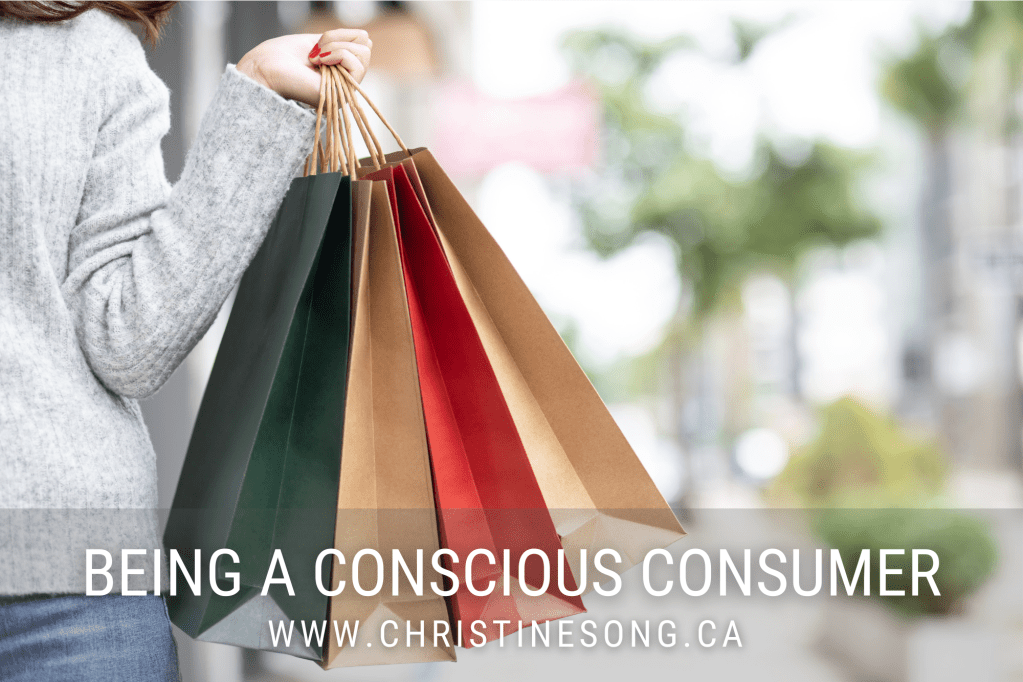
In last week’s blog post, I talked about Buy Nothing Day and being a conscious consumer. I thought that this week’s blog post would be a continuation, especially since I had a few questions and reactions to my previous blog post. In that blog post, I posed four questions to help you become a more conscious consumer. I will use these four questions as main talking points in this blog post:
1) Do you need the item? Will you make use of it?
I received a question from a friend asking for my thoughts since they usually wait I received a question from a friend asking for my thoughts since they usually wait until these kinds of sales to buy items they otherwise could not afford. Along the same lines of this, another close friend was sharing a conversation they had with their brother, where their brother said, “don’t you think that people who say ‘boycott Black Friday’ are just a bunch of rich, privileged people?”
I also wait until these sales to purchase items that I otherwise could not afford. But it’s important to be intentional when choosing what we are purchasing, rather than just buying things that we do not need just because it is on sale. For this reason, I believe that it is NOT a privilege to abstain from purchasing unnecessary things on Black Friday. I do believe that uselessness is subjective and can vary for each person. In other words, we should make sure that what we choose to purchase is something that we will use often and we are not just buying the item on an impulse.
2) Do you really need to buy it new? Is it possible to find the item used or thrifted?
I recognize that having the ability to shop secondhand is a privilege. For instance, it takes time and energy to seek out secondhand items. It is more convenient to buy something new, especially with the rise of Amazon. If we can spend time and effort to find something that we need from a secondhand source, it will help reduce the number of new items produced in this world. However, I think that, like recycling, buying things secondhand can potentially create a false sense of security as well. Buying items secondhand is wonderful to reduce waste when purchasing items we need, but it is possible to overconsume if we are not conscious consumers. Just because an item is secondhand, it does not mean we need to buy it unless we have already had the intention to purchase that item.
3) What companies sell this item? Are there more sustainable and ethical companies that you can support when purchasing this item
I recognize the amount of privilege that it takes to research companies. I also recognize that buying things from sustainable and ethical companies can be more costly. After becoming more aware of the fast fashion industry over the years, I’ve been trying to support more ethical and sustainable companies, such as companies that source ethically harvested materials and pay their employees a fair wage. Unfortunately, this often comes at a steep financial price. But when I think about fast fashion, I realize that it should not be normal for a shirt to cost $5, considering the amount of time and energy needed to design, manufacture, distribute, and sell a shirt. When financially possible, it is important to spend money to support ethical businesses.
4) Can you buy this item locally instead of having it shipped?
Thinking about this question sometimes has me in a conundrum. For instance, I needed to buy more dental floss a few months ago. I tried to find a floss that was biodegradable and vegan, but I could not find it locally. Instead, I was only able to find it from a company overseas. So I pondered for quite a while, trying to see: if it was better to buy a less environmentally-friendly floss locally or buy a more environmentally-friendly floss from overseas? The second option could be potentially less environmentally friendly depending on the energy required to deliver the floss to Canada. Which is truly the more environmentally-friendly floss? I’m not sure that I have the answer to this.
I hope that today’s blog gives you more insight into becoming a conscious consumer. As a takeaway message, it is important to constantly ask questions when purchasing an item. We should be asking questions on if the thing is necessary for us to have, and we should also be asking questions about how to obtain the necessary item in a more eco-friendly way. If you have any tips on becoming a more conscious consumer or have thoughts about this topic, please leave me a comment below or send me a message. I would love to chat!
Cheers,
Christine
 Christine Song
One response to “Being a Conscious Consumer”
[…] gift will be used and will not end up being donated (and likely ending up in a landfill). I have a blog post that talks about being a conscious consumer. While that blog post talks about consciously buying […]
LikeLike