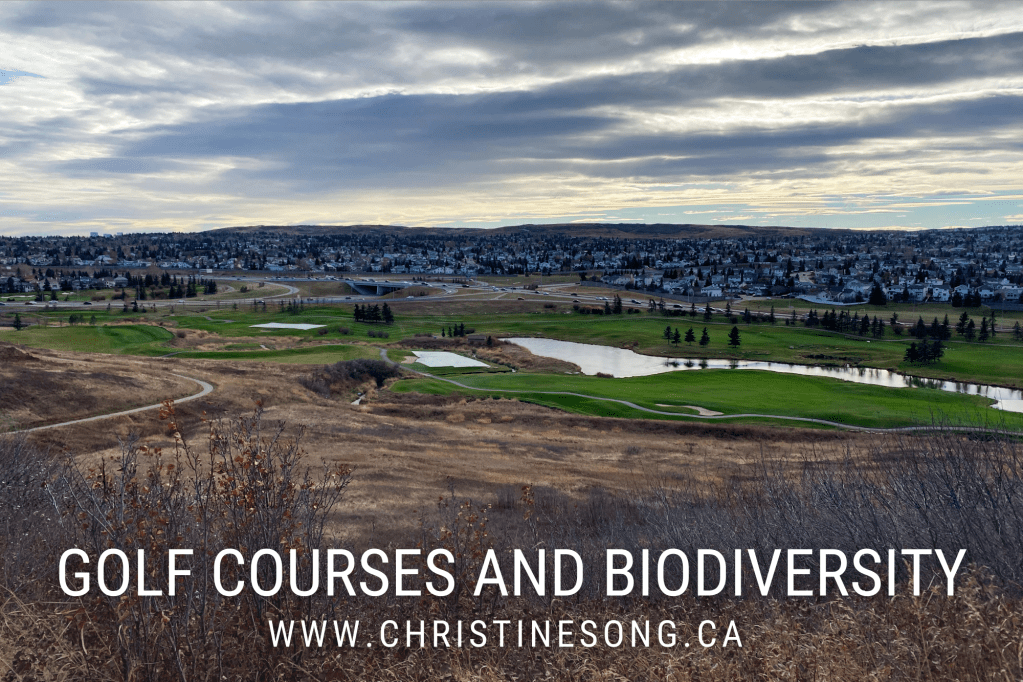
I took the above photo while walking my dog a couple of weeks ago. Do you notice anything interesting about the picture? The golf course is the only area that is still green. All vegetation outside the golf course has changed to brown since it is almost winter. My uncle is an avid golfer, so I promise that this blog post will not be bashing golf as a sport! Instead, I will discuss maintenance behind golf courses and methods that can help maintain biodiversity on golf courses. As with all my blog posts, I encourage open discussion, so please leave me a comment or email me if you would like to discuss more!
While each golf course varies in size, I am sure we can agree that they are large areas of green space that require massive amounts of maintenance. Most golf courses that I see look pristine, even with large amounts of daily foot and cart traffic. They are mowed to keep grass consistent, watered to keep grass alive, and fertilized to keep grass growing. They need to use herbicides to prevent weeds from persisting. With all of this maintenance, it’s essential to recognize that golf courses are home to terrestrial and aquatic organisms.
Given that golf courses are large areas of green space with high amounts of biodiversity, it is important to ensure that maintaining them does not harm organisms or water systems. This also applies to our own lawns if you live in a place with a front or back lawn. While some people might argue that it is better to remove golf courses altogether and allow for the re-wilding of these areas, I believe that it is possible to maintain golf courses to enable biodiversity to thrive. This includes ensuring that fertilizers and herbicides chosen are not harmful to organisms living in and around the golf course. Additionally, it is essential to leave certain areas undeveloped with natural vegetation, such as immediate areas beside a pond, to prevent soil erosion over time.
Another aspect of golf course maintenance is overseeding. This refers to putting seeds on top of existing grass to ensure continued grass growth throughout the year. Some golf courses have opted to paint their grass instead (like the one mentioned in this post). According to this article, painting grass instead of overseeding can have environmental benefits, such as reducing the water and fertilizer needed for maintenance. However, I could not find an article discussing the potential impacts of painting grass on biodiversity. Depending on the type of paint used, it could potentially be toxic to living organisms and pose issues in water systems. This is a topic that needs to be researched thoroughly.
Overall, I believe there are ways to ensure that golf courses can be functional habitats for many organisms while still being usable for golfing. I hope that this blog post has inspired you to think about how golf courses are maintained and how you choose to maintain your own lawns as well!
Cheers,
Christine
 Christine Song